The legal challenge between Jesus Christ and the law expert
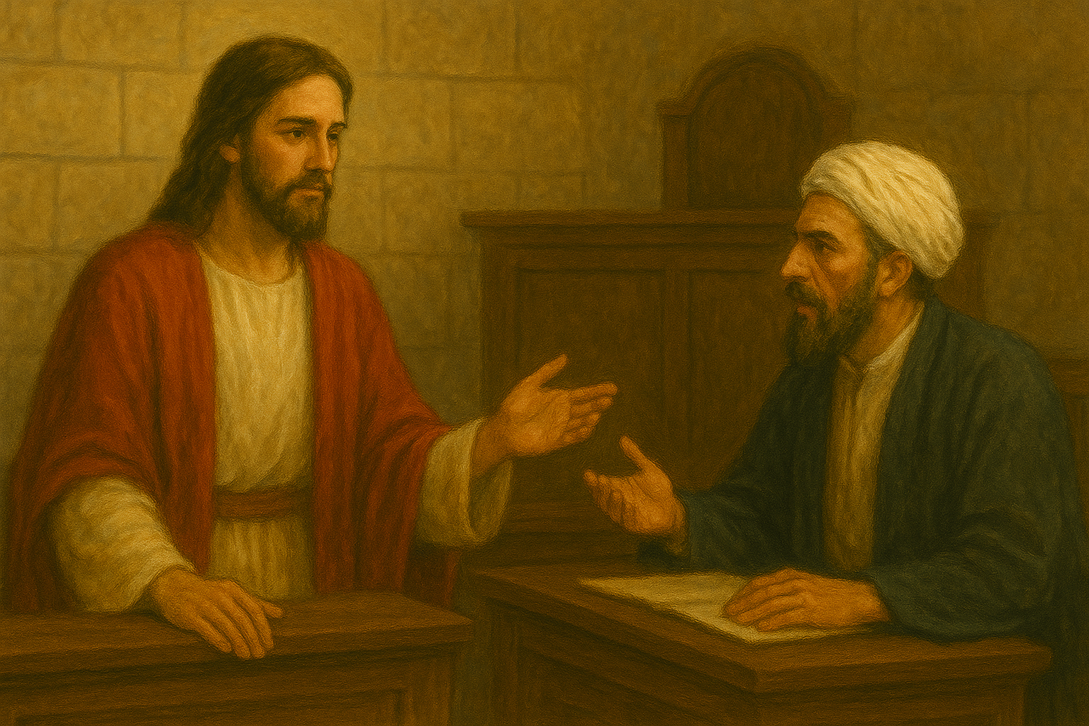
One of the most frequently preached parables among Christians is the Parable of the Good Samaritan. Many sermons place the priest and the Levite in a negative light, portraying them as heartless and lacking compassion. But in reality, Jesus was presenting this story in the tone and framework of a courtroom. A Law Expert—an expert in the Torah—had stood up to test Jesus, fully intending to trap Him in a legal argument. As we study this passage, we must imagine Jesus and the Law Expert standing in a courtroom-like setting.
Luke 10:25 “One day an expert in the Law stood up to test (ἐκπειράζων) Jesus. ‘Teacher,’ he asked, ‘what must I do to inherit eternal life?’
The word ekpeirazón means to test, challenge, or tempt with the intention to trap. It can be compared to dark manipulation.
The Law Expert was launching a legal challenge. In short, he was saying, “Alright, you teach all these things. My question is: What must I do to inherit eternal life?”
This man was undeniably intelligent. Jesus had to answer carefully. Remember: this was not a theological challenge—it was a legal challenge. In theology, we can speak freely from interpretation or belief. But in a courtroom, personal opinions have no legal standing. The answer must be grounded in legal, authorized evidence.
So Jesus stood, in a sense, as both a lawyer and a defendant, defending Himself with the Law itself.
What was Jesus’ response? Luke 10:26: “Jesus answered, ‘What is written in the Law (νόμῳ)? How do you read it?’”
Jesus deliberately used the word nomos—the legal term for “law.” The case was clearly a legal dispute.
The Law Expert then made his crucial mistake: he quoted the Torah.
Luke 10:27 “Love the Lord your God with all your heart and with all your soul and with all your strength and with all your mind,’ and ‘Love your neighbor as yourself.’”
Luke 10:28 Jesus replied, “You have answered correctly. Do this and you will live.”
In essence, Jesus was saying:
“You clearly know the law. Your problem is—you don’t do it.” Then we come to verse 29:
Luke 10:29 “But he wanted to justify himself, so he asked Jesus, ‘And who is my neighbor?’”
This becomes even more interesting because the word “justify” here is the same term Paul uses for justification. The Law Expert was trying to make himself appear right—to strengthen his argument before Jesus.
He was essentially saying: “Fine, I said ‘love your neighbor.’ But define for me who my neighbor actually is.”
Once again—this entire conversation is a legal challenge. What is permitted and what is forbidden under the law?